PRP Hair Treatment Side Effects Explained — Why Most Thane Patients Have Nothing to Fear
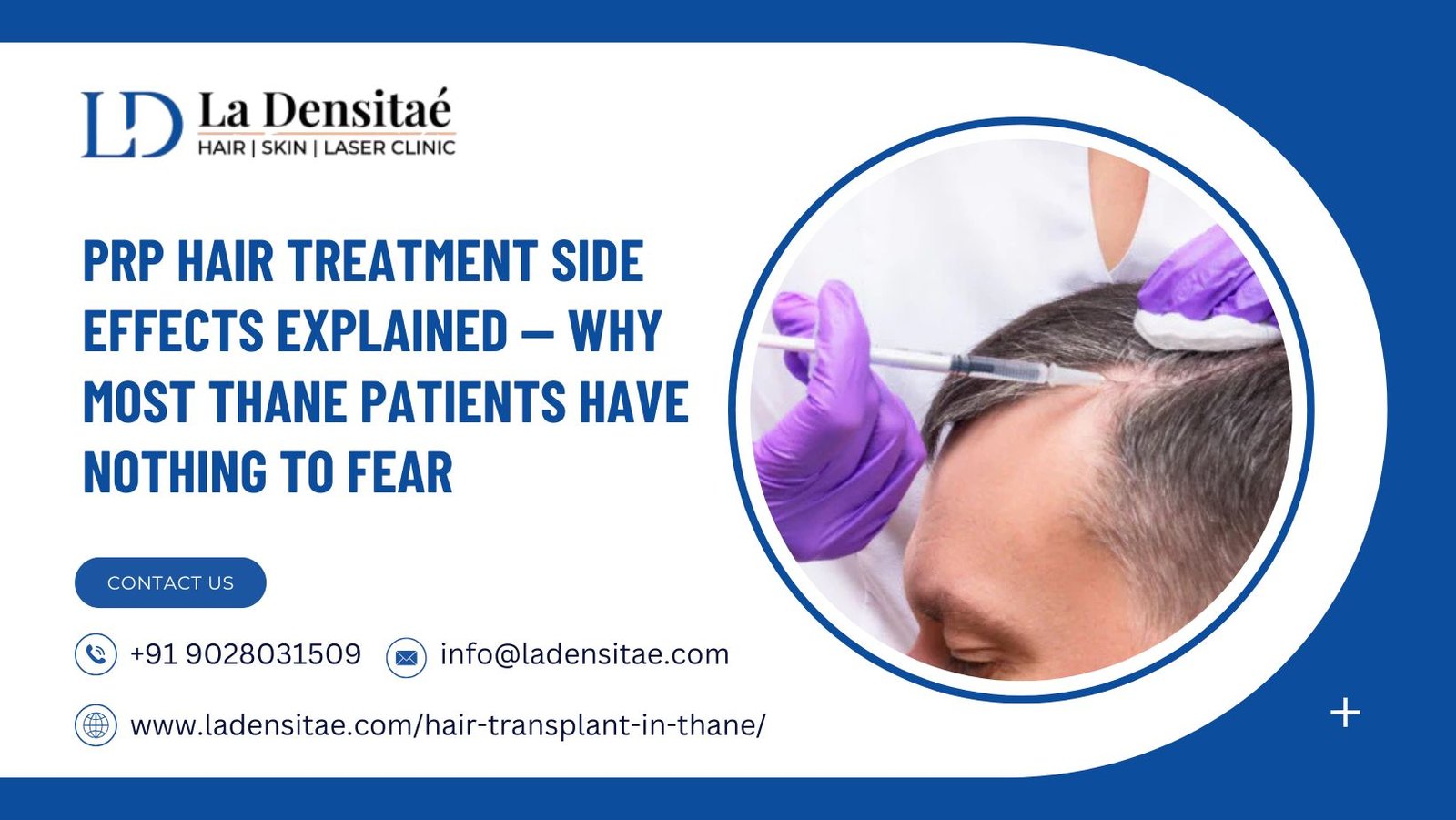
If you have been researching PRP for hair loss and found yourself down a rabbit hole of "what are the side effects," you are not alone. It is one of the first things people search once they move past the basics and start seriously considering the treatment. And honestly, that caution is healthy it means you are approaching this properly rather than just booking the first appointment you find.
The good news is that for most patients, the side effect picture with PRP is genuinely mild. Here is an honest, clear breakdown of what actually happens, why it happens, and what the rare exceptions look like.
Why PRP Has a Strong Safety Profile to Begin With
Before getting into specific PRP hair treatment side effects, it helps to understand why this treatment sits in a different risk category compared to most medical procedures.
PRP uses the patient's own blood. There are no synthetic substances, no foreign materials, and no chemicals being introduced into the scalp. The concentrated plasma injected is entirely derived from what the patient's own body already produces. This autologous nature is what makes serious adverse reactions genuinely rare rather than just uncommon.
Dermatology literature consistently places PRP among the lower-risk options in hair restoration, particularly when performed by trained practitioners using proper technique and sterile protocols.
What Most Patients Actually Experience
Mild Swelling and Redness
The most common response after a PRP session is mild swelling around the treated area and some redness on the scalp surface. This is a normal inflammatory response the body reacting to the injections and the growth factors beginning to work. For most patients, this settles within twenty-four to forty-eight hours without any intervention.
Temporary Scalp Tenderness
The scalp can feel tender or slightly sore for a day or two after the session. This is not a sign of anything going wrong it is simply the expected response to having multiple small injections across a sensitive area. Over-the-counter pain relief, if needed, is usually enough to manage this comfortably.
Minor Bruising at Injection Points
Some patients notice small bruise-like marks at individual injection sites. These are superficial and typically fade within a few days. Patients with naturally sensitive skin may notice this more than others, but it resolves on its own without treatment.
Temporary Headache
A small number of patients report a mild headache in the hours following a session, likely related to scalp tension during the procedure. This is short-lived and not a cause for concern in otherwise healthy patients.
What Is Genuinely Rare
Being honest here matters. While serious complications are uncommon with PRP, they are not impossible, and a responsible article should acknowledge that clearly.
Infection
Because PRP involves injections, there is a theoretical risk of infection if sterile protocols are not followed properly. This is why the clinic and practitioner performing the procedure matter significantly. At reputable clinics like Ladensitae clinic in Thane, sterile technique and proper equipment standards are maintained as non-negotiable parts of the process, not optional considerations.
Allergic Reaction to Additives
PRP itself carries virtually no allergy risk since it comes from the patient's own blood. However, some clinics use additives like calcium chloride as an activating agent during preparation. Patients with known sensitivities should discuss this during consultation rather than assuming the procedure is entirely additive-free.
Nerve or Tissue Injury
When performed by an inexperienced practitioner, injections at incorrect depths can theoretically cause localised tissue irritation. This reinforces why choosing a qualified, experienced surgeon matters — not just for transplant procedures but for supportive treatments like PRP as well.
Under the clinical direction of Dr Gajanan Jadhao, whose experience spans hair restoration procedures across multiple cities including Thane, PRP protocols are performed with the same clinical seriousness applied to surgical procedures rather than treated as a minor add-on requiring less precision.
Who Should Be Extra Cautious
PRP is not suitable for everyone, and a proper pre-treatment assessment should identify any concerns before proceeding.
Patients with blood clotting disorders, certain autoimmune conditions, or active scalp infections may not be suitable candidates. Those on blood-thinning medications should discuss this with their doctor before starting PRP, since these can affect platelet function and therefore the effectiveness of the treatment itself.
A trustworthy hair transplant clinic in Thane will ask about these factors during consultation rather than proceeding without reviewing individual medical history.
PRP in the Context of Hair Transplant Recovery
For patients already planning or recovering from a hair transplant in Thane, PRP carries the same mild side effect profile described above, with the added benefit of supporting graft healing and follicle recovery during the post-operative window.
The temporary redness or tenderness from a PRP session during recovery is minimal compared to the overall healing process from surgery itself, and most patients find it entirely manageable alongside their existing post-operative care routine.
Understanding PRP Treatment Cost in Thane
PRP treatment cost in Thane varies based on the number of sessions recommended, clinic infrastructure, and whether PRP is part of a bundled hair transplant cost in Thane package or charged per session separately.
What is worth understanding is that cost should not be the deciding factor when choosing where to have this done. A cheaper session performed without proper sterile protocols or adequate concentration technique delivers both weaker results and a higher risk of the very side effects most patients are trying to avoid.
Final Thoughts
PRP hair treatment side effects are real but reassuringly manageable for the vast majority of patients. Mild swelling, temporary tenderness, and minor redness for a day or two are the most common experiences — not the dramatic reactions some online searches might suggest.
What genuinely matters is where the treatment is performed and by whom. A qualified practitioner, proper sterile technique, and an honest pre-treatment assessment are what keep the side effect profile as mild as the research consistently shows it to be. For most Thane patients approaching PRP with realistic expectations, there is very little to fear and quite a lot to potentially gain.
Powered by Froala Editor
You May Also Like

Basti: अखिलेश यादव के जन्मदिन पर सेवा और पर्यावरण संरक्षण का संदेश, 53 पौधे रोपे व गमछे बांटे

Basti: खेत में खेल रहे मासूम को बिच्छू ने डंक मारा, उपचार के दौरान तोड़ा दम

Basti: सेवानिवृत्ति पर बीईओ का सम्मान, ब्लॉक प्रमुख बोले— सरलता और कर्तव्यनिष्ठा से जीता सभी का विश्वास

Basti: बिजली की रोशनी का इंतजार कर रहा तुलसीपुर, कई घर आज भी अंधेरे में

Orchard Digital Marketing | Data-Led SEO & Digital Advertising Agency for #1 Link Building Services Agency in Orchard